Food
What you eat, above all fats.
04 · Why it matters
VLDL, IDL, LDL and Lp(a) each carry a single ApoB. So your ApoB equals the total number of those particles.1
Cholesterol only enters the wall of your arteries inside these particles. The more that circulate, the more can stay there. The cholesterol each one carries varies.1
The ESC and EAS lipid guidelines consider it useful for assessing cardiovascular risk, above all with high triglycerides, diabetes or obesity.2
05 · In the app
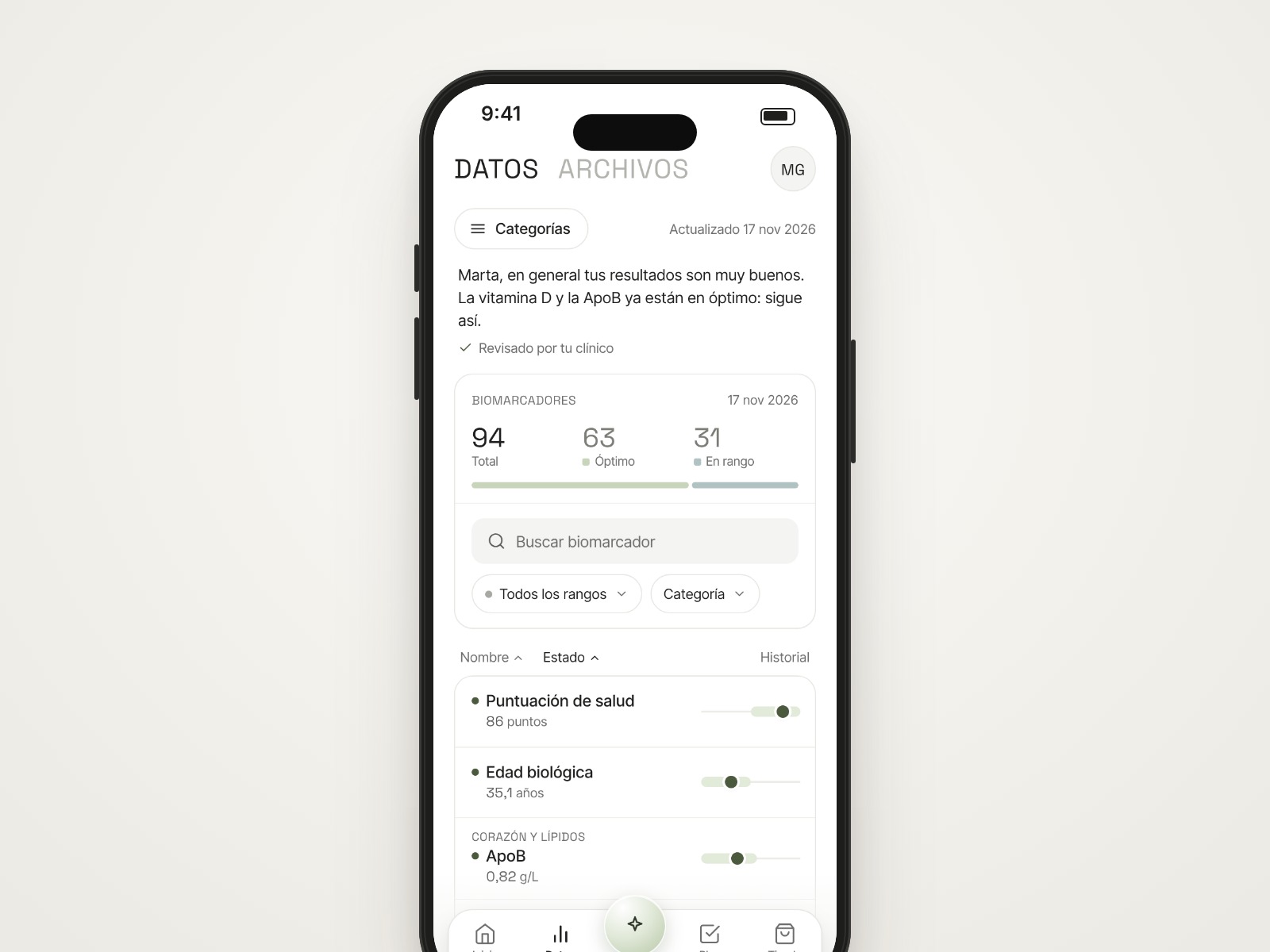
You see every value with its status. Tap ApoB to open it.
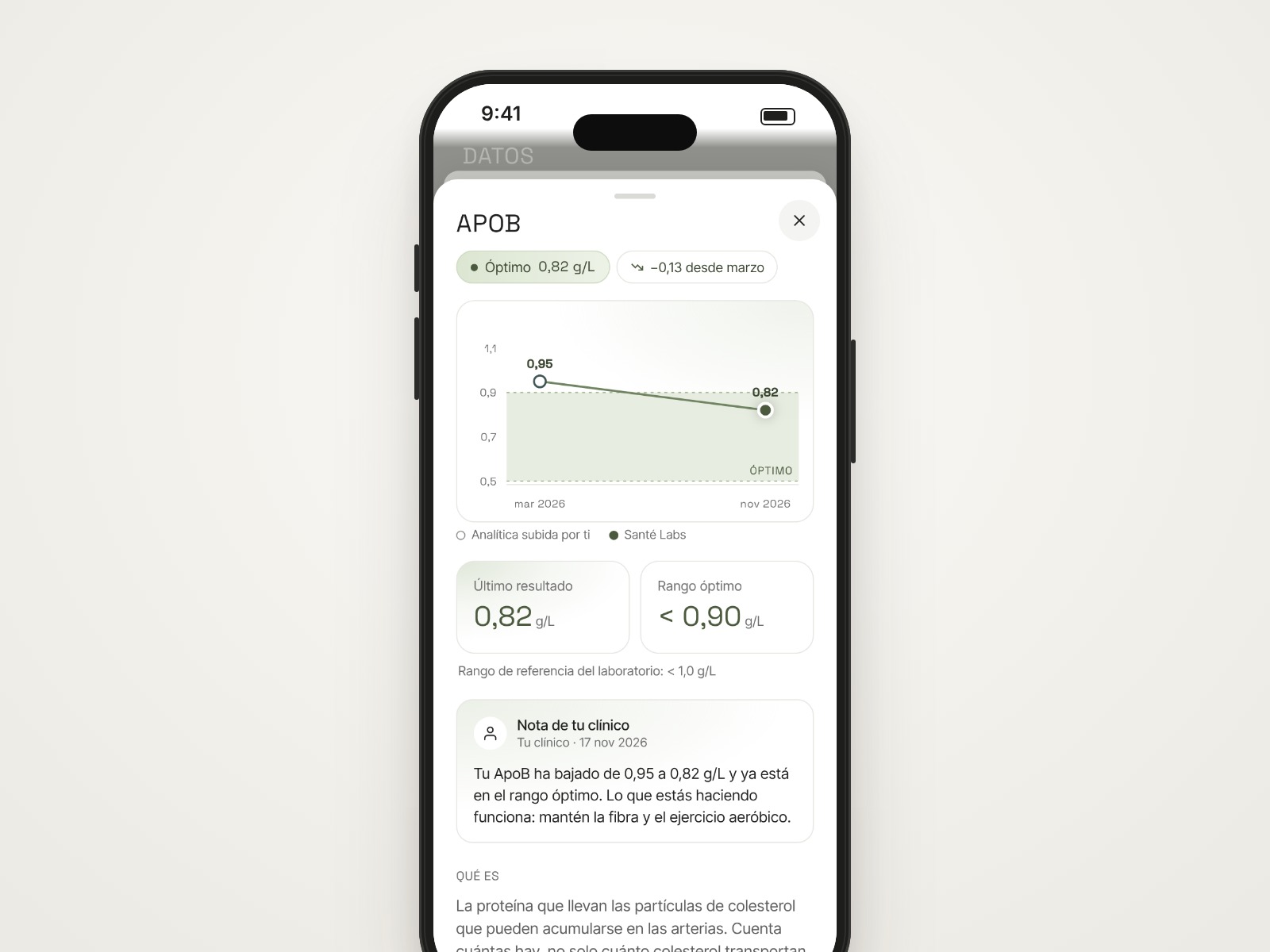
Your value, its optimal range and how it has moved since your last blood test.
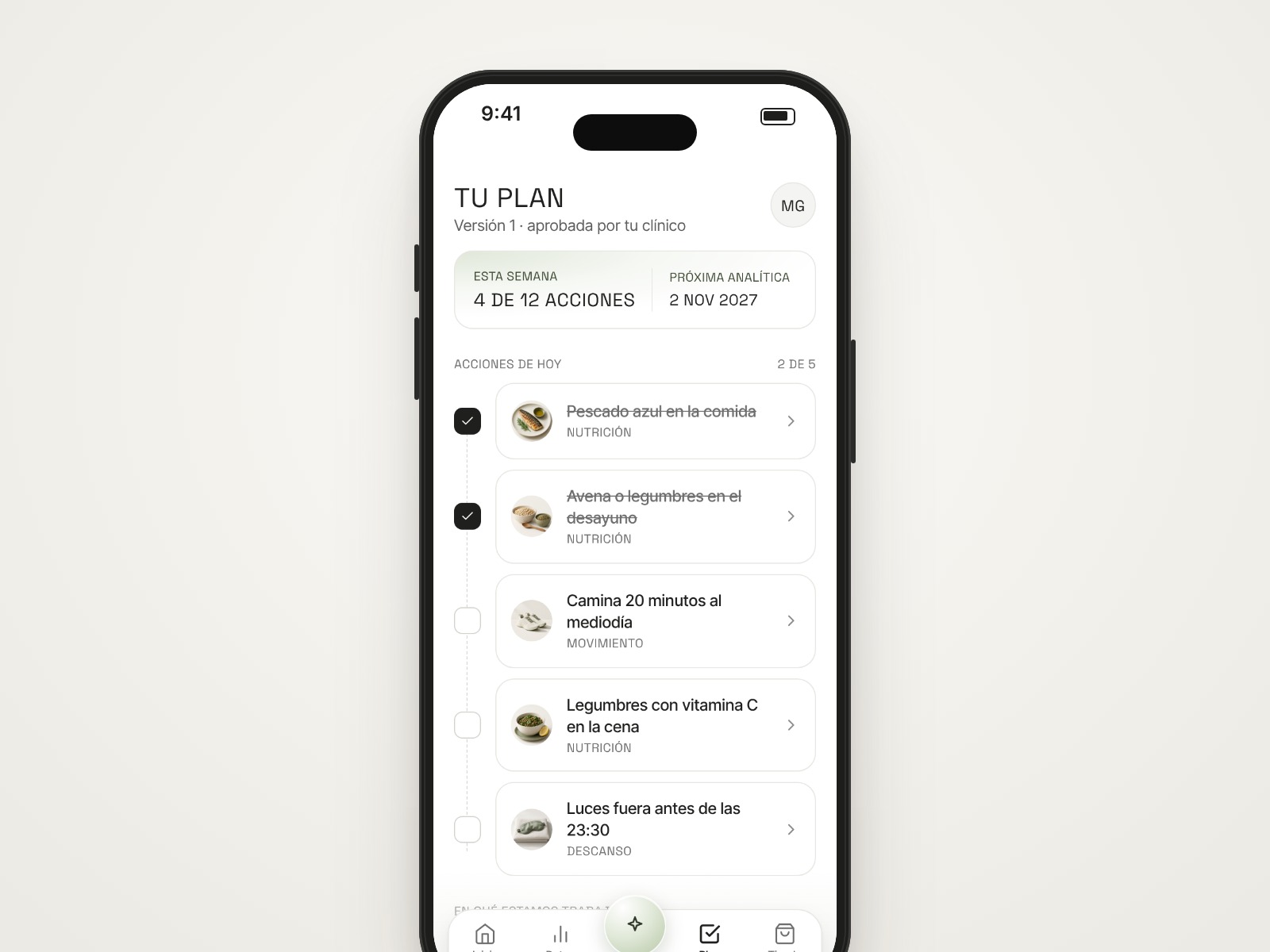
Clear steps to keep it there. And Santé AI for your questions.
Real app screens with example values. Santé AI does not diagnose. If this is an emergency, call 112.
06 · Compared with
| Marker | What it measures | What it adds | What it misses |
|---|---|---|---|
| ApoB | The number of particles that carry cholesterol to your arteries. | A single figure that counts them all, VLDL and Lp(a) included. | It does not say how much cholesterol each particle carries. |
| LDL cholesterol | The cholesterol inside LDL particles. | The most used figure, and the one with the most studies behind it. | If your particles are small, it can undercount how many there are. |
| Non-HDL cholesterol | All your cholesterol minus HDL. | It includes VLDL and remnants. It is calculated without fasting. | It still measures cholesterol, not particles. |
| Lp(a) | One specific particle type that carries ApoB, largely inherited. | Guidelines advise measuring it at least once in a lifetime. | Your habits barely change it. |
| ApoB/ApoA1 ratio | The balance between ApoB particles and HDL. | It sums the balance up in one number. | It is always read with the rest of your lipids. |
We measure all five in your yearly blood test. Your clinician reads them together.1, 2
07 · How we measure it

08 · What can influence it
What you eat, above all fats.
Moving every day and training.
Your family history counts.
Some medicines change it.
Your clinician reads your value alongside these factors and leaves you a note. Your action plan takes them into account. And you can ask Santé AI anything about your result.
09 · Related
10 · Sources
This content is educational and does not replace an assessment by a health professional. It does not diagnose.